What It Actually Is
Self-esteem defined properly, as researchers use the term, rather than as a synonym for confidence.
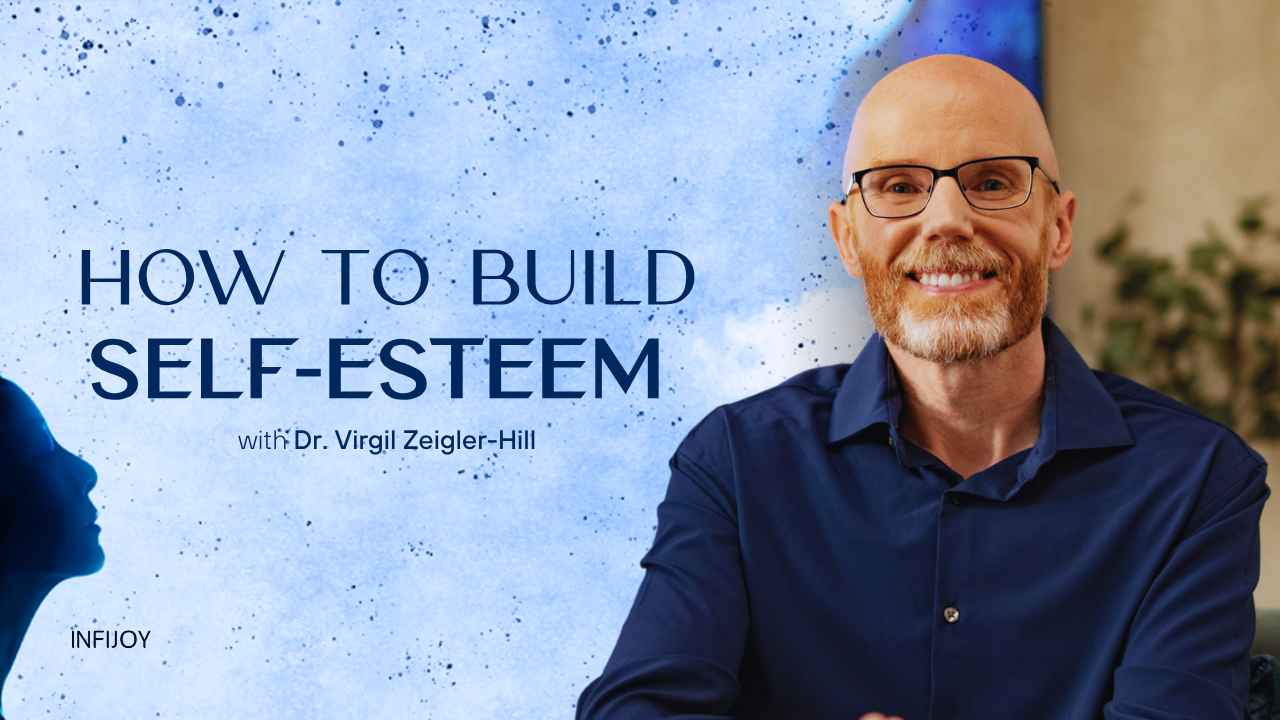
A four-week course with Dr. Virgil Zeigler-Hill, Professor of Psychology at Oakland University and one of the field's leading self-esteem researchers. Twenty lessons, roughly ten minutes a day, built on evidence rather than affirmations: what self-esteem actually is, where yours came from and how to build it.
4 weeks · 20 lessons · 5 hours · 2 bonuses · lifetime access
Join now for $99.9948-hour money-back guarantee · Secure checkout · Instant access
Four weeks that build in order: what self-esteem is, what it does to your choices, where yours came from, and what changes once it is healthy.
Self-esteem defined properly, as researchers use the term, rather than as a synonym for confidence.
How your self-evaluation quietly shapes your actions, your values and the goals you let yourself have.
Why self-esteem tracks social acceptance, and what that explains about how it moves.
Childhood and life experience, and which unresolved parts are still doing the damage.
How healthy self-esteem changes what a rejection or a failure costs you afterwards.
Week four works through wellbeing, physical health, relationships, education and career.
Self-esteem is one of the most studied topics in psychology and one of the worst served by popular advice. Telling yourself you are enough does not work, and there is a large body of research explaining exactly why.

Saying something you do not believe tends to make the gap more obvious rather than smaller.
Without a buffer underneath it, your sense of worth moves with whatever happened most recently.
Not consciously. You simply stop considering the things that a person like you would not get.
Insight into the childhood cause is common. Knowing the next step from there is not.
Week three is built on that distinction. What happened to you is fixed, but the issues still left open from it are what keep feeding low self-esteem in the present, and those are workable. That is a different claim from telling you to think positively, and it comes with twenty years of research behind it.
Healthy self-esteem is not a feeling of being great. It is a stable sense of your own worth that does not rise and fall with the last thing that happened, and that changes what you attempt.
What self-esteem is, why it matters, and how it shapes your thoughts, feelings and choices.
Where your self-esteem came from, including childhood and the life experiences that set it.
Specific methods for developing healthy self-esteem and a self-image you can actually hold.
The benefits run through psychological wellbeing, physical health, relationships and career.

Dr. Zeigler-Hill has spent more than twenty years researching self-esteem and personality, and developed the status-signaling model of self-esteem. This is the research, taught directly rather than filtered through someone else's summary of it.
Join now for $99.99
Virgil is a Professor of Psychology and Director of Graduate Training at Oakland University, and has spent more than twenty years researching self-esteem, personality and interpersonal relationships. He developed the status-signaling model of self-esteem, which explains why self-worth tracks social acceptance rather than floating free of it.
He is the editor or co-editor of several of the field's reference works, including Self-Esteem, The Dark Side of Personality, Evolutionary Perspectives on Social Psychology and The SAGE Handbook of Personality and Individual Differences, and holds editorial roles at leading personality journals. His research covers how beliefs about yourself and others affect intimacy, satisfaction and how long relationships last. If you want the applied companion to this course, see The Confidence Boost Challenge.
His work studies how personality traits, the admirable and the difficult alike, interact with motivation, relationships and wellbeing, and how self-esteem functions inside that.
Editor or co-editor of several influential volumes on self-esteem and personality, and an editorial contributor to the journals where this research gets published.
Not a bad week. A standing sense that you are not quite enough for the thing in front of you.
You would rather understand what self-esteem responds to than be told to love yourself more.
Your sense of worth tracks whatever happened most recently, and you would like a steadier floor.
Week three is about recognising which unresolved parts are still feeding the present.
Week four covers career and education specifically, alongside health and relationships.
Twenty short lessons across four weeks, built for roughly ten minutes a day.
Built to be worked through rather than watched: twenty short lessons with expert videos, a daily video of ten to fifteen minutes, five hours of on-demand learning, two bonuses and lifetime access to the materials. Follow the weekly schedule or work at your own pace.

Definition first, then effect, then origin, then application. That sequence matters: most self-esteem advice starts at week four and skips the three weeks that make it work.
What self-esteem actually is, as the research defines it, and why how you evaluate yourself shapes the actions you take, the values you hold, the goals you set and your ability to handle challenges. The definition is the week's work, because almost everything that follows depends on getting it right.
Self-esteem is multifaceted, and this week takes it apart. It signals how accepted you feel and whether you belong, it buffers you against setbacks, and it shapes how confident you are in what you do. Each of those is a different mechanism, and knowing which one is moving explains a great deal.
Tracing your own self-esteem back through childhood and life experience. The past itself cannot be changed, but unresolved issues can be healed, and issues left unaddressed are what keep feeding low self-esteem in the present. This is the week that turns insight into something actionable.
What healthy self-esteem does for psychological wellbeing, physical health, relationships, education and career success, taken one area at a time with practical ways to develop it. By this point you have the definition, the mechanism and the origin, so the application has something to attach to.
If within the first two days you feel this is not the right fit, email support@infijoy.com and we will refund your enrolment fee in full, no questions and no forms.
Buy How to Build Healthy Self-Esteem outright, or join Infijoy membership for all 37 expert-led courses.
48-hour money-back guarantee · Instant access
$299.99 billed yearly · Cancel anytime · 7-day guarantee
Still unsure? Email support@infijoy.com and we will answer.
Most of it starts at the application and skips the groundwork. This course spends three weeks on what self-esteem is, what it responds to and where yours came from before it gets to what to do, because the practical advice only works once those are in place. It is taught by a researcher who has spent two decades studying the subject rather than by someone summarising the field.
About ten minutes a day. There are 20 short lessons across four weeks, each a video of roughly ten to fifteen minutes, adding up to five hours of on-demand learning. You can follow the weekly schedule or work at your own pace.
Across the four weeks you will learn:
The Self-Esteem Resource Pack, which puts the course material into a form you can keep using after the four weeks, and Virgil's personal masterclass, a deeper session with him included at no extra cost. Both come with the course.
No, and week one is partly about the difference. Confidence is usually about a specific situation or ability, while self-esteem is the more general evaluation underneath it. The two interact, which is why confidence built on shaky self-esteem tends not to hold. If you want the applied, situation-level work as well, The Confidence Boost Challenge covers that side.
None. The course is built for people with no prior knowledge, and every concept is explained from the ground up. The research is the source, not the reading list.
Virgil holds a Ph.D. in psychology and is a Professor of Psychology and Director of Graduate Training at Oakland University, with more than twenty years of research on self-esteem, personality and relationships. He developed the status-signaling model of self-esteem and has edited several of the field's reference works, including the volume Self-Esteem and The Dark Side of Personality.
Yes. Start whenever you are ready. The weekly structure is there if you want it, and lifetime access means you can take longer over a module or return to one later.
Lifetime access to all 20 lessons, both bonuses and the accompanying materials, so you can revisit any week whenever you need it.
No. This is educational content about the psychology of self-esteem. It is not therapy, diagnosis or treatment for any condition, and it is not a substitute for care from a qualified professional. If something from your past feels too heavy to work through alone, that is worth taking to one.
Join How to Build Healthy Self-Esteem and spend ten minutes a day on the research that explains what self-esteem is and how to build it.
48-hour money-back guarantee · Secure checkout · Instant access