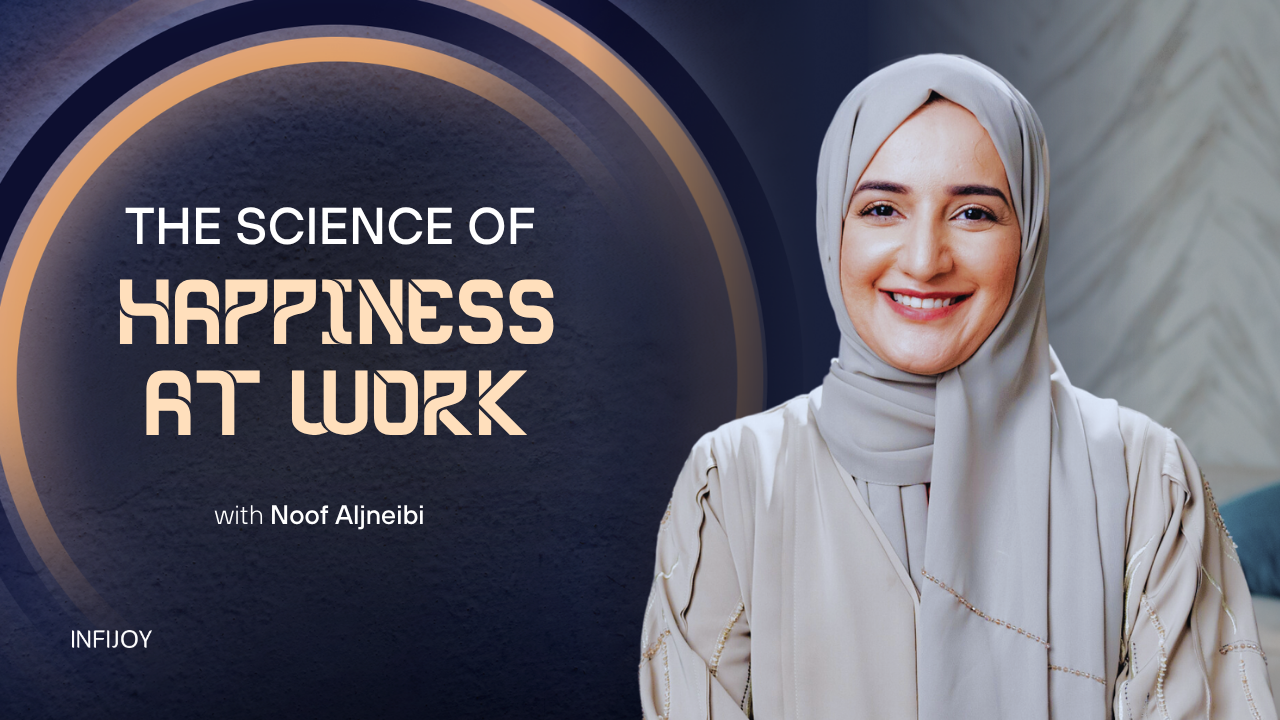
A Culture of Wellness
What one actually looks like on an ordinary Tuesday morning, not in a policy document.
A four-week course with Noof M. Aljneibi, well-being and sustainable development advisor to the UAE government and the first female Arab recipient of the International Positive Psychology Fellow award. Twenty lessons on what the research actually shows, and how to apply it.
4 weeks · 20 lessons · 6 hours · certificate · lifetime access
Join now for $119.9948-hour money-back guarantee · Secure checkout · Instant access
Four weeks moving from what a culture of wellness looks like, to the evidence linking it to performance, to the two skills that carry it: resilience and emotional intelligence.
What one actually looks like on an ordinary Tuesday morning, not in a policy document.
What the studies show about well-being, engagement and output, and the return on investment.
Identifying what actually drains you, and preparing for events you cannot predict.
Building the mindset that holds when things do not go the way you planned.
Acknowledging and labelling emotions so you understand them well enough to manage them.
A realistic version of it, defined by you rather than borrowed from someone else.
It gets budgeted as a benefit, which means it gets cut when things are hard, which is exactly when it matters. The research says it belongs in the performance conversation instead.

Yoga at lunch and a fruit bowl, with nothing measuring whether any of it changed anything.
You believe well-being matters. Being asked to justify it in performance terms is where it stalls.
Personal and professional life compete for the same hours, and one of them always wins.
Covid changed how everyone plans. Preparing for unpredictability is now part of the job.
Week two is devoted to it: what the studies show about performance and well-being, whether people genuinely perform better when happier, and what the return looks like when an organisation implements well-being strategies deliberately.
The course equips you with practical tools and insights from positive psychology to improve your own workplace well-being and effectiveness, and to build a culture of happiness and engagement around you.
Understand the fundamentals of workplace well-being, and what they actually mean in your role.
Create a workable balance between personal and professional life rather than an aspirational one.
Discover what boosts workplace engagement and productivity, then initiate strategies that promote well-being.
Techniques for overcoming challenging times at work, which is when the material earns its place.

Noof has spent over a decade designing well-being policy for governments and universities, including as Chief Happiness and Well-being Officer at UAE University. The course reflects work that had to survive implementation, not just review.
Join now for $119.99
Noof is a well-being and sustainable development advisor at the UAE Ministry of Community Empowerment, with over twelve years advancing evidence-based policies that improve individual, organisational and community well-being. She previously served as Director of the Emirates Center for Happiness Research at UAE University, leading research projects, policy reforms and programmes across workplaces, education and society.
She holds a Master's in Applied Positive Psychology from the University of Pennsylvania and is a Certified Dare to Lead facilitator. In 2021 she became the first female Arab recipient of the International Positive Psychology Fellow award. Alongside workplace well-being she works on parent well-being and social policy, has served as a Family Cohesion Expert for the UAE Ministry of Family, and advises the Happiness Foundation Strategy in India.
Noof advises the UAE Ministry of Community Empowerment on quality of life and sustainability development. She has served as a Family Cohesion Expert for the UAE Ministry of Family, and partnered with the Prime Minister's Office and the Ministry of Education on well-being and educational projects.
As Chief Happiness and Well-being Officer at UAE University she led the research unit at the Emirates Center for Happiness Research, collaborated with the University of Melbourne, and works with the Rekhi Foundation for Happiness and the Happiness Foundation Strategy in India.
Week two gives you the evidence and the return-on-investment argument you keep being asked for.
A culture of wellness is largely set by whoever runs the team, whether or not they intend to.
Small organisations feel the effect of engagement and retention faster than large ones do.
The stress and resilience material in week three works regardless of who you report to.
Noof's background is government well-being policy, so the framing translates directly.
No background in psychology needed. Everything is built from the ground up.
Built to fit around a working month: 20 short lessons with expert videos, daily tasks to apply each idea, six hours of on-demand learning and lifetime access to the videos and notes. A certificate of completion comes with it.
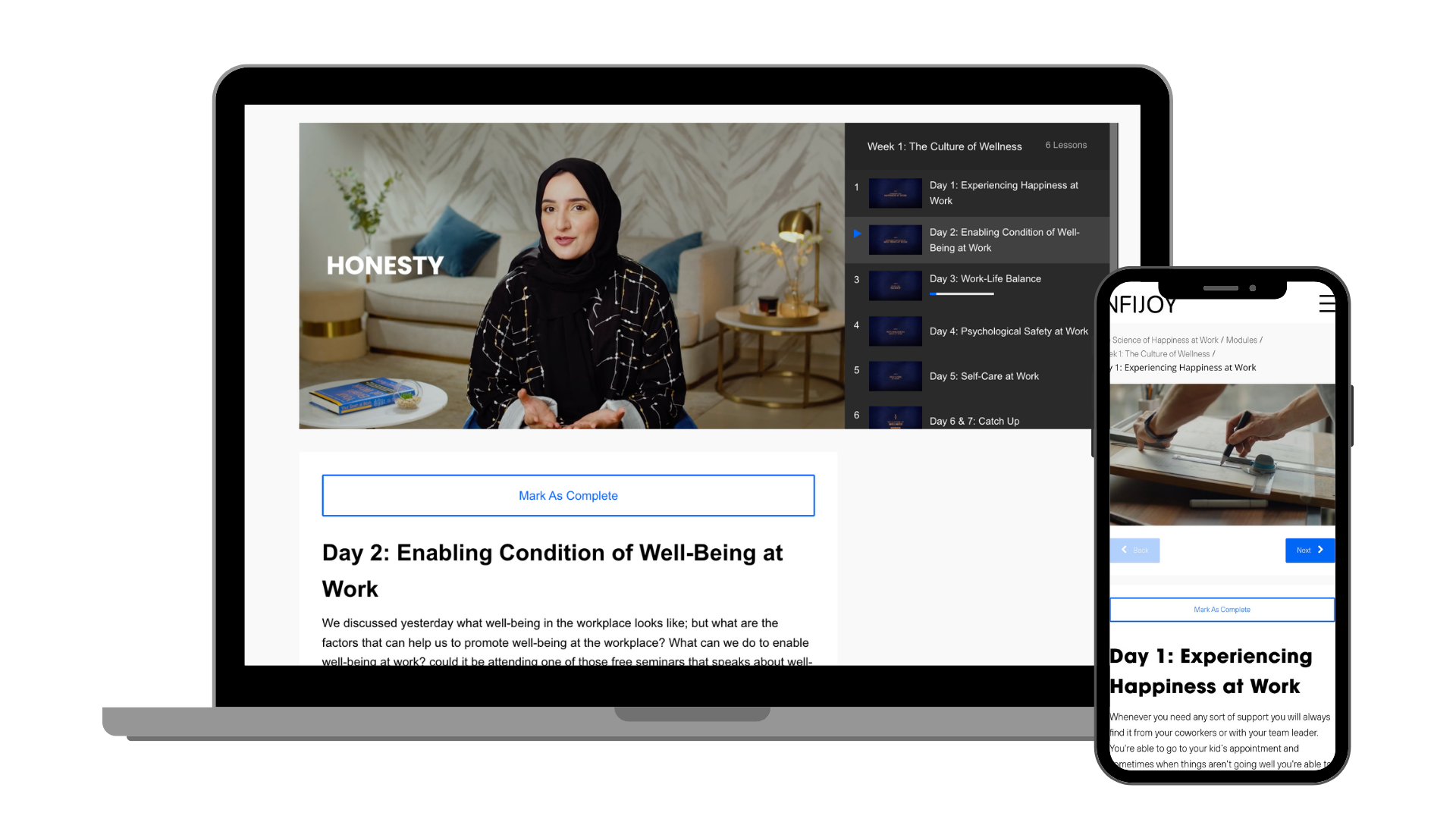
The order matters: define it, prove it, then build the two capacities that keep it going when the quarter gets difficult.
You arrive early with a coffee, ready to go. Your colleagues are smiling and everyone seems glad to be there. You have the tools and resources to do the work, your team and your leader believe in your ability, and it is a place that helps you learn and grow. That is what a culture of wellness at work looks like, and week one defines it properly.
The link between the science of well-being and performance. Why should every organisation take care of employee well-being? What have the studies actually shown: can you perform better if you are happier, and can you be more engaged? What is the return on investment when well-being strategies are implemented at work, and how do you benefit from those findings yourself?
How managing your stressors and building a resilient mindset promotes well-being at work. Covid changed how everyone approaches planning, and this week is about being prepared for the unexpected anyway: examining your sources of information, learning tactics for unpredictable events, and changing for the better.
Experts in emotional agility emphasise acknowledging and labelling your emotions, so that you understand both them and the experience, and know how to manage them. The final week focuses on putting emotional intelligence to work, which is where the previous three weeks become usable day to day.
If within the first two days you feel this is not the right fit, email support@infijoy.com and we will refund your enrolment fee in full, no questions and no forms.
Buy The Science of Happiness at Work outright, or join Infijoy membership for all 37 expert-led courses.
48-hour money-back guarantee · Instant access
$299.99 billed yearly · Cancel anytime · 7-day guarantee
Still unsure? Email support@infijoy.com and we will answer.
Both. Noof's stated aim is to help build a culture that values well-being whether you are a team member, a team leader or a business owner. Individually you get tools for your own well-being and effectiveness; in a leadership role you also get the evidence and the strategies to change the environment.
Week two is devoted to it, covering what studies show about the relationship between well-being, engagement and performance, and the return on investment from workplace well-being strategies. Noof spent over a decade in evidence-based policy work, so the emphasis on evidence is not decorative.
Six hours of on-demand learning in total, across 20 short lessons over four weeks. Each lesson comes with a daily task designed to fit into a working day rather than compete with it.
Across the four weeks you will:
Yes. Start whenever you are ready and work at your own pace. Lifetime access means you can return to a specific week when circumstances make it relevant again.
None. No background in psychology, HR or management theory is assumed, and every concept is built from the ground up.
Noof M. Aljneibi holds a Master's in Applied Positive Psychology from the University of Pennsylvania and is a Certified Dare to Lead facilitator. She is a well-being and sustainable development advisor at the UAE Ministry of Community Empowerment, with over twelve years advancing evidence-based well-being policy. She previously served as Director of the Emirates Center for Happiness Research and Chief Happiness and Well-being Officer at UAE University, and as a Family Cohesion Expert for the UAE Ministry of Family. In 2021 she became the first female Arab recipient of the International Positive Psychology Fellow award.
Lifetime access to all twenty lessons and the accompanying notes, so you can return whenever you need a refresher.
No. This is educational well-being content covering positive psychology and everyday working practice. It is not professional HR, legal or occupational health advice, and it is not treatment for burnout, stress or any other condition.
Join The Science of Happiness at Work and spend a month on what the research actually shows about well-being and performance, and how to put it to work where you are.
48-hour money-back guarantee · Secure checkout · Instant access