What Is Consciousness?
May 14, 2026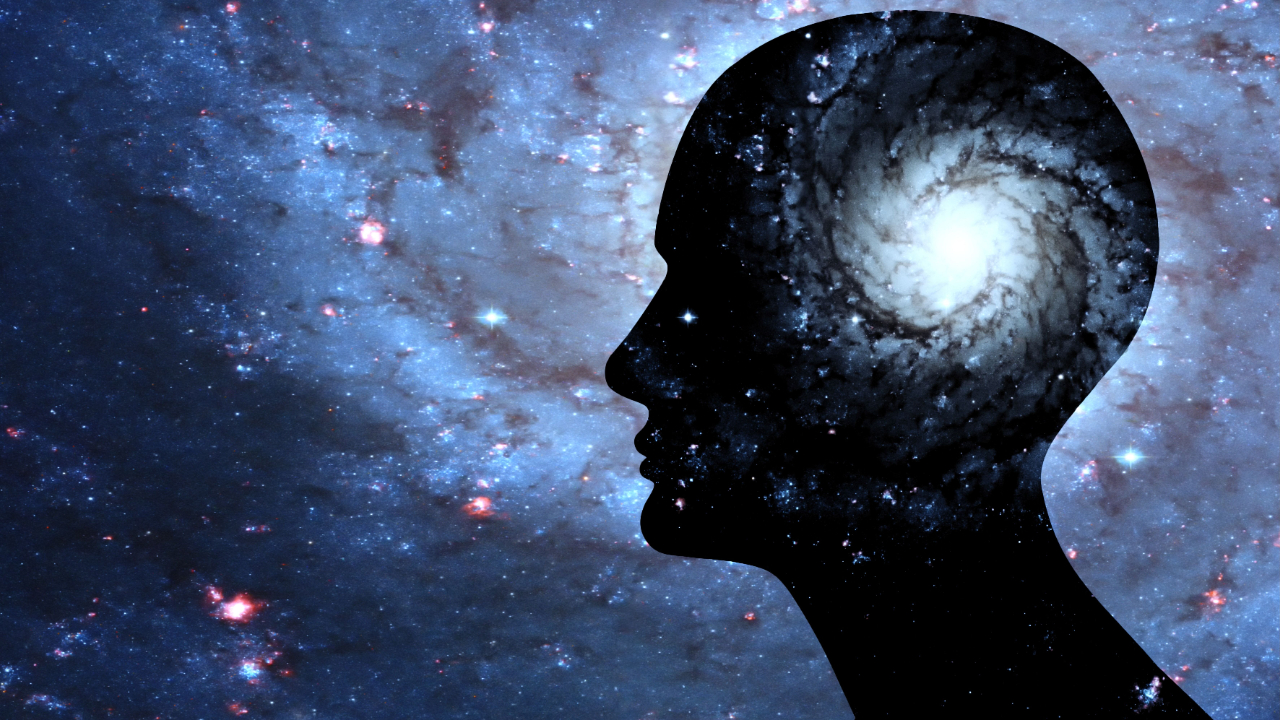
One of the most extraordinary, and perhaps excruciating, mysteries of life is the self-awareness of the human mind. Not only are we capable of complex thought processes, but we also witness and respond to these thought processes. Not only do we conjure, interpret, create, explain, rationalize, and decipher the world around us, but we are cognizant, or conscious, of all of it. Many dictionaries define consciousness as simply an awareness. Conceptually, it incorporates but also exists beyond the intellectual mind. It’s a state of awakeness beyond our thoughts and feelings, beyond the ego and the id, beyond even sleep. Which is why the matter of consciousness, in a beautifully meta fashion, has puzzled philosophers and scientists for millennia. How, we ask, can this intangibly mystical realm of existence be explained?
Consciousness according to spiritual philosophy
Spiritually speaking, consciousness is often understood as the eternal self or soul. It’s what is left once all earthly ideas and attachments are stripped away. Religions such as Buddhism and Hinduism seek to access or attain pure consciousness – a depth of awareness and understanding that transcends the ruminations of the mind and the suffering this creates. It is here, according to many spiritual philosophies, that we meet god. This is where the divine resides in all of us, and where perhaps we are connected to the universe as a whole. It’s a comforting notion. Through this lens, we can understand what it means to “explore” deeper or altered states of consciousness – to get closer to a divine understanding of life, and the blissful peace that can bring.
Consciousness according to modern science
Modern science, meanwhile, may have come a long way to explain how we got here and how we’re put together, but there currently remains no clear-cut explanation for human consciousness. Some schools of neuroscience, the study of the mind’s hardware, suggests that consciousness is created by the integration of information from all the physical perceptions and processes taking place throughout the nervous system. The “higher-order” theory separates immediate, lower-level perception and sensation from a fundamental processing level, or consciousness. Neuroscience has long identified electrical activity in the brain that correlates to conscious activity – 95% of which we aren’t aware of, because it happens at what’s known as the subconscious level. Looking at consciousness in terms of energy supports the case for panpsychism, which has gained renewed traction and which suggests that consciousness is simply fundamental to nature. By this theory, every particle in the universe has some level of consciousness, just as it contains a certain amount of energy.
How to be more conscious
Whatever our intellectual understanding of consciousness may be, we all have our own subjective, introspective relationship with it. Living consciously is about acknowledging that we are capable of deeper levels of awareness, and are actively seeking more understanding. Meditation and other practices aimed at clearing out mental clutter are designed for accessing greater levels of consciousness – getting to a place where perhaps we can see a broader picture. Or, according to Dr Joe Dispenza’s four states of consciousness, no picture at all. “We don’t see things as how they are,” he says, “we see them as we are.” When we talk about being “awake” in the world, it doesn’t mean we have all the answers – but we do have the humility to see that what we thought was absolute truth might not be. It’s like Neo stepping out of the Matrix and discovering a whole other level of understanding for his situation. Consciousness itself might not help us figure out consciousness, but the more consciousness we seek might just bring us more connection, depth of understanding and, ultimately, peace.
All of the content on our website is thoroughly researched to ensure that the information shared is evidence-based. For more information, please visit the academic journals that influenced this article: Consciousness As A Physical Process Caused By The Organization Of Energy In The Brain; Consciousness; The Neuroscience Of Consciousness; Human Consciousness: Where Is It From And What Is It For; Comparing Theories Of Consciousness: Why It Matters And How To Do It.