Obsessive-Compulsive Disorder (OCD): A Quick Guide
May 17, 2026
Hands up if you’ve ever heard - or told - a joke about OCD. Perhaps it involved describing a friend who washes their hands really often, or talking about another person who really likes keeping things tidy, as “being quite OCD”. Or maybe it’s a meme called “OCD Nightmare” that displays an uncomfortable scene of objects placed either asymmetrically or quite haphazardly. Perhaps you might have joked about it yourself, saying “I have OCD” in a self-deprecating way, when you wanted to express how you tend to be more attentive to certain things in life – like how you like your t-shirts folded; how straight you like the pictures hung on your wall; or how the chart on a spreadsheet is arranged.
Yet to psychologists, and to people suffering from it, OCD is not a joke, nor is it something humorous. It is a mental health issue that can seriously affect a person not only socially and emotionally, but also behaviourally and cognitively. And just as anxiety can cause someone to suffer from poor mental health, OCD can also damage one’s well-being. Read on to learn about its symptoms, causes, and treatments.
What Is OCD?
Obsessive-compulsive disorder – also known as OCD – is a mental health issue that can make people struggle with “obsessions” and “compulsions”. These struggles are either psychological, cognitive, and behavioral, or some combination of the three. They are typically driven by the distress that comes from experiencing anxiety about a stimulus, such as the fear of dirtiness, for instance. The exact triggers, however, tend to vary among individuals.
In general, OCD consists of two parts – obsessions and compulsions:
What Are Obsessions?
Obsessions are intrusive thoughts or images. People with OCD can have these ideas that usually surround a topic – for example, symmetry or contamination. Yet obsessions are not as simple as worries. In fact, they are not only recurrent and persistent, but often disturbing as well – to the point that these thoughts or images can significantly affect one’s daily life.
According to the Diagnostic and Statistical Manual of Mental Disorders (Fifth Edition), people with OCD are generally aware of their obsessions. And because of that, they find ways to cope, striving to ignore or even suppress the monkey mind reaction by replacing these chattering intrusive thoughts with other, more common thoughts or behaviors – which, over time, can turn into compulsions.
What Are Compulsions?
Compulsions are repetitive behaviors or mental rituals. When a person wants to tame their obsessions, they can develop compulsions. Generally speaking, compulsions are relevant to the obsessive thoughts and images that an OCD person has – because compulsions are actually ways to manage obsessions, alongside anxious feelings.
Compulsions, like obsessions, tend to differ for each person with OCD. Some common repetitive behaviors include washing one’s hands repeatedly, checking or locking (and re-locking) the door, and rewriting prose repeatedly. Mentally, compulsions can come in the forms of counting numbers or repeating words, excessively ruminating on certain thoughts for long periods, or having the urge to follow rigid and unexplainable rules. These behaviors and acts are typically challenging to control for people with OCD.
What Are the Symptoms of OCD?
OCD symptoms vary among individuals, and different types of obsession can lead to different acts of compulsion. Because of this variation, one common way to understand OCD is to view its symptoms as categories.
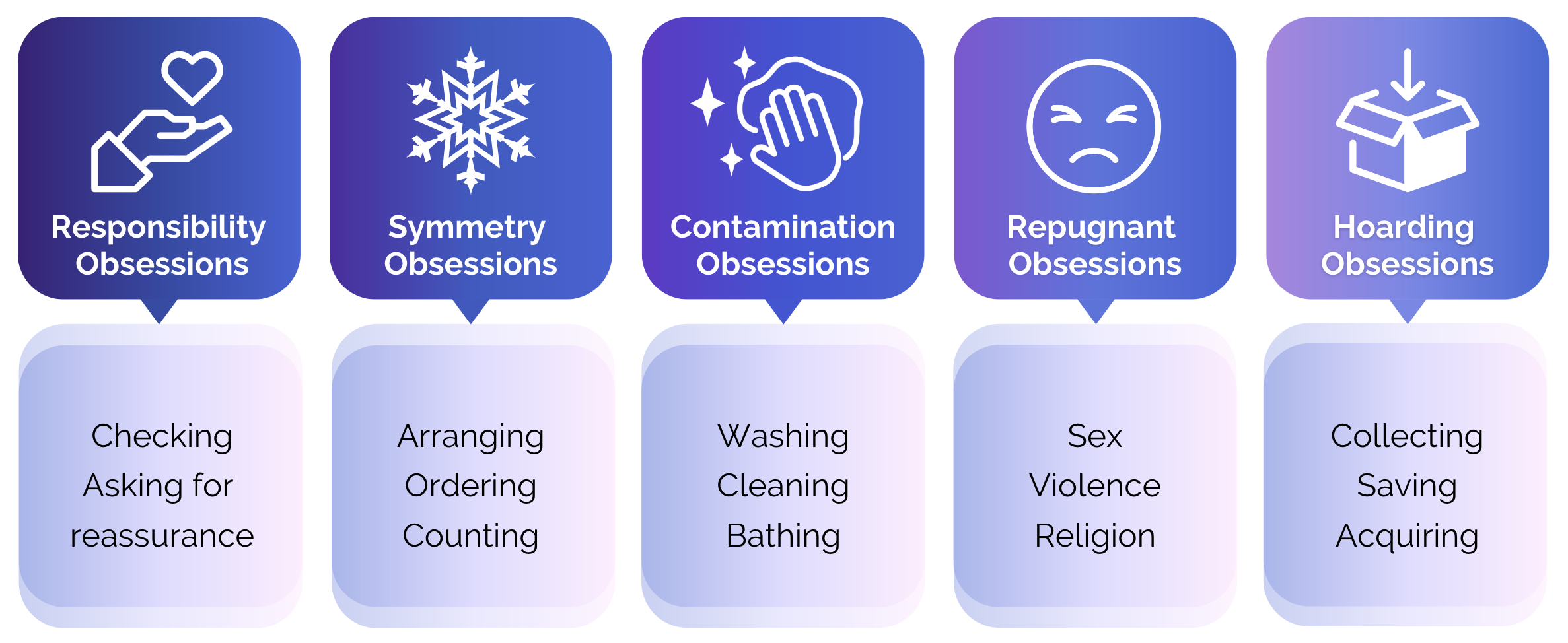
Dr. Jonathan Abramowitz – a clinical psychologist and professor at the University of North Carolina – and his colleagues, postulated that are five groups of obsessions:
1. Responsibility Obsessions
Coming from the fear of not being responsible enough, this type of obsession can make people feel anxious about failing to maintain specific responsibilities – whether those duties are really theirs, or not. These obsessions can lead to compulsions, including checking if the door is locked or seeking reassurance from others.
2. Symmetry Obsessions
People with this obsession can feel the need to arrange things to be symmetrical, or at least, arrange them in a way that follows a rule. While these rules may still seem mysterious to many people, this kind of obsession can lead to a desire to order objects, count numbers, or ensure that certain physical items are always lined up “just so”. If someone or something distracts an OCD person from counting numbers, he or she will, very likely, start counting from “1” again.
3. Contamination Obsessions
People with this type of obsessions tend to have an irrational fear of dirtiness or becoming ‘contaminated’ by something. These fears, as a result, can lead them to develop intrusive or phobic thoughts of dirtiness (or illness, in some cases), alongside an urge to stay clean. These thoughts can, thus, cause OCD people to have cleaning-related compulsions, including the repeated washing of hands, taking baths, and cleaning the house multiple times a day – or taking extraordinary precautions against any chance of being exposed to germs, for instance.
4. Repugnant Obsessions
This group can involve thoughts or images relevant to sex, violence, and religion. These obsessions tend to not only be violent but also immoral – for instance, they can include thoughts around the harming or torture of others.
5. Hoarding Obsessions
People with these obsessions tend to have the urge to collect objects. For example, they may find it challenging to simply declutter their homes to any extent. They may also experience struggles to throw things away – even when they no longer use them. These obsessions also tend to be related to other mental health issues, such as compulsive buying or shopping, and hoarding disorders.
What Are the Causes of OCD?
Cognitive and Behavioral Causes of OCD
OCD can be caused by an altered belief about a specific concern – like contamination, for instance. Specifically, this approach suggests that having a concern around the matter can be normal for most people (in this case, the thought of wanting to be cleaned). But when a person starts to view being dirty – or not clean enough – as highly unacceptable and immoral, they can develop obsessions around it. One can also develop obsessions when one believes a concern could threaten one's safety. For example, the thought of not being clean makes them anxious, or they fear severe illness or death as a result of it.
Obsessions can increase anxiety levels. As a result, people with OCD who are aware of these issues tend to find ways to cope with these negative feelings. Compulsions are, essentially, what OCD people use to tame their anxiousness. For instance, excessive hand-washing is a common compulsion for managing a contamination obsession.
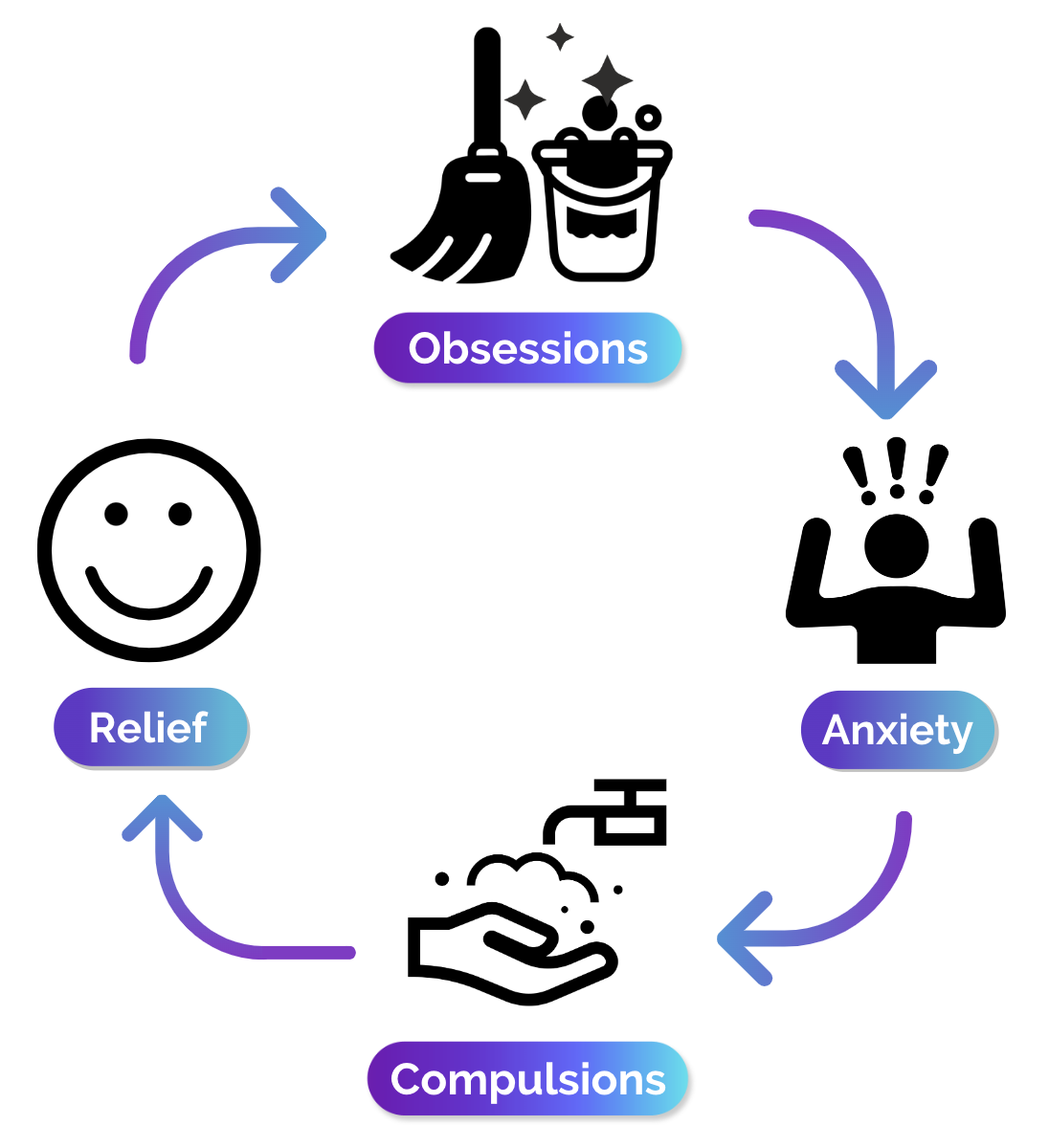
This vicious cycle of obsessions and compulsions can constantly change one’s anxiety levels from high to low, and from low to high — and this is the major cause of OCD from a cognitive-behavioral sense. Psychologists also believe that this cycle can be problematic since compulsions are not only unsustainable and unrealistic ways to deal with obsessions, but they can also be harmful to one’s physical and social well-being. For example, washing and sanitizing the hands too much can damage the skin. Repeating certain words or actions over and over can harm one’s social skills or hinder one's ability to work. A constant fluctuation of anxiety levels or intrusive thoughts, too, can take a toll on one’s mental and emotional health.
Genetic and Biological Causes of OCD
Scientists suggest that atypical genetic history can increase one’s chance of developing OCD symptoms. In particular, studies have found that people with OCD tend to have an issue with their 5-HTT gene. This gene is responsible for the brain’s serotonin system, and the serotonin system is essential for regulating mood and anxiety. According to research studies, low serotonin levels have been found to cause intrusive thoughts – a major symptom of OCD.
When people have an atypical 5-HTT gene, their serotonin system – including the serotonin receptor and the dopamine secretion – can become dysfunctional. This can lower one’s serotonin levels. And this, in turn, can make a person more likely to develop intrusive thoughts, which can potentially lead to obsessions.
Other studies suggest that problems in specific brain regions can also cause OCD symptoms. For instance, some researchers discovered that two areas of the brain – the frontal orbitofrontal cortex and the dorsolateral prefrontal cortex – are responsible for verifying past behaviors. In other words, these areas can help a person realize what he or she did before. Damage in these two brain regions, as a result, can contribute to OCD symptoms such as excessive doubting and repetitive behaviors – as the person might not realize their past actions.
What Are the Treatment Options for OCD?
There are various ways to treat OCD – and these can be clinical or non-clinical. Here are some of the most common methods:
1. Cognitive-Behavioral Therapy (CBT)
Derived from the cognitive-behavioral cause, CBT addresses the altered beliefs that most people with OCD struggle with. CBT can help people with OCD to examine their thought patterns – obsessions and compulsions – with the use of tools, including worksheets, psychological assessments, and a mood diary. By changing these distorted and unrealistic thoughts, as well as working on the root cause of the person’s OCD, CBT can help manage OCD symptoms.
2. Mindfulness and Meditation
Both mindfulness and meditation offer effective ways of treating OCD symptoms. With one of the key goals of their use being to help the user to stay fully present and aware in the here and now, these methods can help people with OCD reduce their intrusive thoughts, as well as their obsessions and compulsions. Mindfulness and meditation can also help OCD people stay calm, and restore their inner peace in the midst of chaos. And in doing so, these modalities can not only help tame one’s urge to engage in compulsions but also relieve stress and anxiety.
Try the Meditation Challenge to create your own mindfulness routine to reduce stress and anxiety.
3. Medications
For people with more severe OCD symptoms, this treatment aims to work with the brain chemicals related to intrusive thoughts. While there are numerous medication options for treating OCD, the most common group of OCD medications is known as Selective Serotonin Reuptake Inhibitors (SSRIs). Generally speaking, this group of drugs is classified as antidepressants – medications that are also used for treating depression. According to the biological causes of or links to OCD, low serotonin levels can lead to intrusive thoughts, and SSRIs work by blocking serotonin's reuptake. In other words, SSRIs can increase serotonin levels in the brain and thus help reduce intrusive, negative thoughts – that may otherwise lead to greater OCD symptoms.
In conclusion, OCD is a complex and often misunderstood mental health condition that affects more people than we realize. With proper understanding, diagnosis, and treatment, those struggling can learn to manage their symptoms and live with a greater sense of ease and happiness.
All of the content on our website is thoroughly researched to ensure that the information shared is evidence-based. For more information, please visit the academic journals and other resources that influenced this article: Overview - Obsessive compulsive disorder (OCD); DSM-IV to DSM-5 Obsessive-Compulsive Disorder Comparison; Obsessive-Compulsive Disorder; Jonathan S. Abramowitz, PhD; Obsessive Compulsive Disorder; Excessive Hand Washing Is A Sign of OCD; Obsessive Compulsive Disorder, Response to Serotonin Reuptake Inhibitors and the Serotonin Transporter Gene; Serotonin | Cleveland Clinic; The Effects of a Mindfulness Intervention on Obsessive-Compulsive Symptoms in a Non-Clinical Student Population; Selective Serotonin Re‐Uptake Inhibitors (Ssris) Versus Placebo for Obsessive Compulsive Disorder (OCD)